
10 Logo Design Best Practices for Northwest Indiana Businesses
For a small business owner in Northwest Indiana, a logo isn’t just artwork; it’s the face of your company. It’s on your truck wrap cruising down I-65, on the sign of your Portage storefront, and on the business card you hand to a potential client in Chicagoland. A great logo works 24/7 to build trust, attract customers, and set you apart from the competition. But how do you ensure it’s doing its job? It all comes down to following professional logo design best practices.
Forget fleeting trends and generic templates that blend into the local market. This guide breaks down the 10 essential principles that transform a simple mark into a powerful business asset. Think of it as a blueprint for creating a visual identity that connects with customers and drives growth for your brand.
We’ll move beyond vague advice and give you actionable strategies for everything from choosing colors and fonts to ensuring your design looks just as sharp on a massive billboard as it does on a tiny social media profile. Whether you’re a contractor, a salon owner, or a food truck operator, these insights from the team at Creative Graphics Solutions will equip you to build a brand that lasts. Let's dive into the core rules that make a logo effective for your business.
1. Keep It Simple and Minimalist
When it comes to logo design best practices, less is almost always more. Simplicity ensures your logo communicates your brand’s core message instantly and without confusion. Think of the most iconic logos: Apple's single fruit, Nike's dynamic swoosh, or McDonald's golden arches. They are powerful because they are simple, memorable, and uncluttered.
A minimalist logo is a strategic business asset. It remains clear and recognizable whether it's on a giant billboard in Portage or as a tiny favicon on a web browser. This clarity is crucial for small businesses, from a food truck in Valparaiso to a salon in Chicagoland, aiming to build a strong, lasting brand identity.
Why Simplicity Works
A simple logo is easier for the human brain to process and remember. Complex designs with multiple colors, intricate patterns, or excessive details can look dated quickly and become muddled at small sizes. By stripping away non-essential elements, you create a timeless and versatile mark that works across all your marketing materials, from vehicle wraps to social media profiles.
Key Insight: The best logos don't try to tell the whole story. They create a memorable symbol that your audience will come to associate with your unique value and service.
Action Steps for a Minimalist Logo:
Focus on One Concept: Your logo should represent a single, powerful idea. For an HVAC contractor, this could be a stylized flame and snowflake. For a barbershop, it might be a clean, modern take on classic scissors.
Use a Limited Palette: Stick to one to three colors. This reinforces brand consistency, keeps printing costs down, and ensures your logo looks good in a single color (like black or white).
Pass the Thumbnail Test: Before finalizing your design, shrink it down to the size of a social media profile picture. If it becomes an unrecognizable blur, it’s too complicated. Clarity at a small scale is non-negotiable.
Avoid Fleeting Trends: Steer clear of trendy fonts, complex gradients, or drop shadows. Classic, clean design endures long after the latest fads have faded.
By embracing minimalism, you aren't being boring; you're being strategic. You're creating a powerful, focused symbol that will represent your Northwest Indiana business effectively for years.
2. Create a Distinctive and Unique Identity
Your logo’s primary job is to separate you from the competition. A distinctive logo acts as a unique visual signature for your business, ensuring that when customers see it, they think of you and no one else. In a crowded market from Portage to Valparaiso, blending in is the fastest way to be forgotten. A unique design avoids industry clichés and generic symbols, building a memorable brand from the first glance.
Think of how Airbnb’s “Bélo” symbol created a unique mark in the travel industry, or how Slack’s colorful hash mark stands out in a sea of blue tech logos. These designs succeed because they are original. For a local Chicagoland business, this means creating a logo that is instantly recognizable as yours, whether it's a unique take on a classic symbol for a barbershop or an abstract mark for a nonprofit that conveys its mission.
Why Uniqueness Works
A distinctive logo is more memorable and less likely to be confused with competitors, which is crucial for building brand equity. It prevents potential legal issues related to trademark infringement and communicates that your business is thoughtful and professional. This is one of the most critical logo design best practices for establishing a strong market position.
Key Insight: A generic logo suggests a generic business. Your unique visual identity is your first and best chance to communicate what makes your company different.
Action Steps for a Distinctive Logo:
Research Local Competitors: Before you start designing, analyze the logos of your direct competitors in Northwest Indiana. Note common colors, symbols, and fonts, and then intentionally steer your design in a different direction.
Avoid Industry Clichés: Is every roofer using a house outline? Is every salon using a silhouette? Brainstorm concepts that communicate your value without resorting to the most overused imagery in your industry.
Explore Multiple Concepts: Don’t settle on one idea. Challenge your designer to develop three to five completely different concepts that explore unique visual avenues for your brand.
Perform a Trademark Search: Once you’ve narrowed down your options, conduct a preliminary search to ensure your design isn’t already in use. This protects your brand legally and confirms its originality.
3. Ensure It’s Scalable and Versatile
A great logo isn't just a pretty picture; it's a hard-working tool that must perform flawlessly everywhere. One of the most critical logo design best practices is ensuring your design is scalable and versatile. This means it must remain clear and impactful whether it's embroidered on a hat, displayed as a tiny app icon, or wrapped around a company vehicle driving through Chicagoland.
Your logo is the face of your brand, and it needs to look its best in every situation. A versatile logo designed by professionals ensures your brand maintains its integrity and recognition, no matter the context or size.
Why Versatility is Non-Negotiable
A logo that doesn't scale properly will cause endless headaches. If your intricate design turns into an unreadable smudge when shrunk for a business card, it has failed. A versatile logo saves you from needing multiple, disjointed versions and guarantees a consistent, professional appearance across all your marketing channels.
Key Insight: Your logo will live in more places than you can imagine. A truly versatile design works effortlessly in any size, color, and medium, from digital screens to physical prints.
Action Steps for a Scalable Logo:
Design in Vector Format: Always create your logo in a vector program like Adobe Illustrator. Vector files can be scaled infinitely up or down without any loss of quality. This is the professional standard.
Test for Every Size: Before approving a design, test it at its extremes. Shrink it to the size of a favicon (16x16 pixels) and imagine it blown up on a billboard in Portage. If it’s not clear at both sizes, it needs refinement.
Create Different Lockups: Develop horizontal, vertical, and icon-only versions of your logo. This gives you the flexibility to fit your brand mark perfectly in any layout, from a website header to a social media profile.
Check One-Color Performance: Your logo must be recognizable in a single color, like solid white or black. This is essential for applications like embroidery, vinyl decals for a food truck, or screen-printed t-shirts.
4. Use Appropriate Color Psychology
Color is often the first thing a person's brain registers in a logo, making it a powerful tool for communicating your brand’s personality. One of the most essential logo design best practices is harnessing color psychology to evoke specific emotions and build an instant connection with your audience. The right palette can convey trust, energy, sophistication, or health before a single word is read.
For a local Northwest Indiana business, from a Portage HVAC company to a salon in Chicagoland, a strategic color palette is not just decoration; it's a core component of your brand identity that influences customer perception.
Why Color Psychology Works
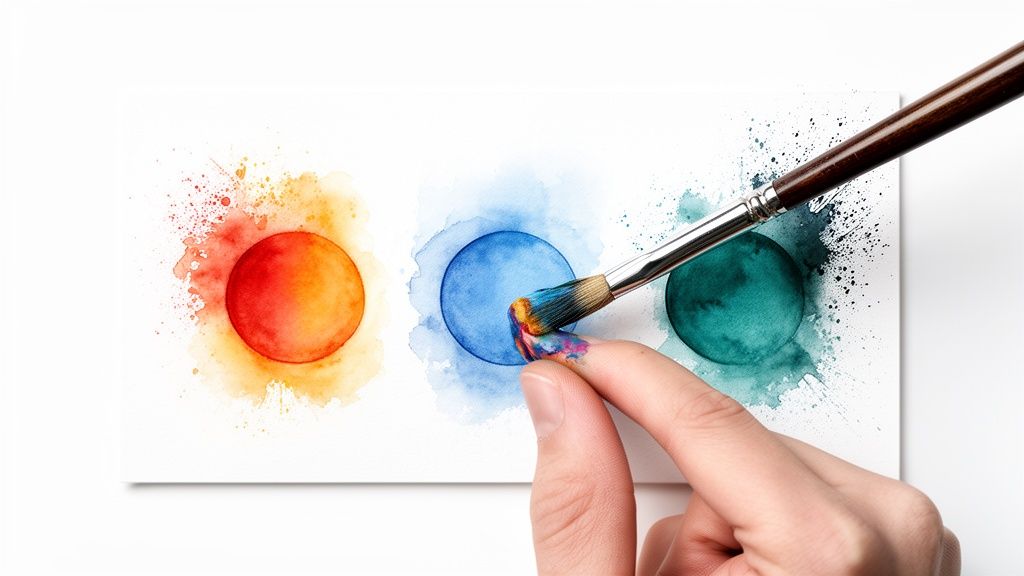
Colors trigger emotional and psychological responses. A strategic logo palette works by aligning these subconscious feelings with your brand’s intended message. For example, blue often conveys trust and reliability (ideal for a contractor), while pink can signal a more feminine, sophisticated vibe (perfect for a beauty salon). Using color intentionally helps differentiate you from competitors and makes your brand more memorable.
Key Insight: Your logo's color palette is a silent conversation with your customer. Choose colors that speak the right language for your brand and resonate with your target audience.
Action Steps for a Strategic Color Palette:
Align with Brand Values: An HVAC business might pair blue (trust, coolness) with orange (energy, warmth) to represent its full range of services. A Valparaiso barbershop could use traditional red, white, and blue to evoke a sense of classic, reliable service.
Consider the Competition: Research what colors your direct competitors are using. You can either choose a palette that fits industry norms or intentionally select a unique color combination to stand out from the crowd.
Ensure Versatility: Your logo must look just as powerful in a single color. Test it in solid black and solid white to ensure the design remains strong and recognizable without its color palette.
Prioritize Consistency: Your chosen colors must reproduce accurately everywhere, from a printed vehicle wrap to a digital ad. Using specific color codes (like Pantone or HEX) ensures your brand's blue looks the same on a business card as it does on your website.
5. Master Typography and Font Selection
The font you choose for your logo does more than just spell out your business name; it conveys a distinct personality. Typography is a key component of logo design best practices, capable of communicating whether your brand is modern and approachable or timeless and iconic. It’s a powerful tool for shaping perception.
For businesses in Portage or across Chicagoland, the right typeface can build an immediate connection. A bold, sans-serif font might signal reliability for a contracting business, while an elegant script could suggest luxury for a Valparaiso salon. This choice is a foundational element of your brand identity.
Why Typography Matters
The typeface in your logo sets the tone. A serif font, with small lines attached to the letters, can feel traditional and trustworthy. In contrast, a clean sans-serif font often feels modern and accessible. The specific letterforms you choose become a visual signature that, when combined with your icon, creates a complete and memorable brand mark.
Key Insight: Your font isn't just text; it's a visual voice for your brand. Choosing the right one ensures your message is heard clearly and correctly.
Action Steps for Font Selection:
Align with Brand Personality: A barbershop might opt for a classic, masculine serif, while a tech startup would lean toward a clean, futuristic sans-serif. Ensure your font choice reflects your industry and brand values.
Prioritize Legibility: Test your chosen font at various sizes. It must be perfectly clear on a massive sign and equally readable when scaled down for a business card or as part of a complete logo lockup.
Check Licensing: Many high-quality fonts require a commercial license for use in a logo. Always verify the terms to avoid legal issues down the road.
Avoid Overly Trendy Fonts: That trendy font from this year will likely look dated in two. Stick to timeless, well-crafted typefaces that will stand the test of time.
6. Aim for Timelessness, Not Trends
While it’s tempting to jump on the latest design craze, one of the most important logo design best practices is to prioritize longevity. A trendy logo might look fresh for a year, but it can quickly appear dated, forcing a costly rebrand. Timeless logos are built on solid design principles, ensuring they remain relevant and effective for decades.
A timeless logo is a long-term investment in your brand's stability and recognition. It builds trust and conveys permanence, which is crucial for a local business, from a trusted contractor in Portage to an established retail store in Chicagoland. By avoiding fleeting styles, you create a mark that won't feel out of place in ten or twenty years.
Why Timelessness Works
Design trends come and go, but a strong concept is forever. A logo that relies on a currently popular font or a complex gradient effect will inevitably look stale once that trend fades. A timeless design, however, focuses on a core idea that is unique to your business. This creates a more authentic and memorable connection with your audience.
Key Insight: Trendy designs follow the crowd. Timeless designs are crafted to lead, creating a symbol that represents your brand's enduring value, not a temporary style.
Action Steps for a Timeless Logo:
Study the Classics: Research logos in your industry that have remained unchanged for over 20 years. Analyze what makes them work: their simple shapes, classic typography, and clear concepts.
Focus on the Concept: Your logo's strength should come from its core idea, not stylistic flair. A heating and cooling company’s logo based on the concepts of hot and cold will outlast one based on a trendy "flat design" effect.
Prioritize Classic Typography: Choose well-established, legible fonts over quirky, decorative ones that will quickly fall out of fashion. A clean sans-serif or a classic serif font is almost always a safe and powerful choice.
Get an Outside Perspective: Test your logo concepts with a diverse age group. If older audience members find it classic and younger audiences still find it appealing, you're on the right track for a timeless design.
By choosing timelessness over trendiness, you are building a foundational asset for your Northwest Indiana business that will serve you faithfully for years.
7. Use Meaningful Symbolism
An effective logo goes beyond aesthetics; it communicates your brand's core values, mission, and personality through visual symbolism. This is one of the most vital logo design best practices because a meaningful symbol tells a story and forges a deeper connection with your audience. The most memorable logos often incorporate clever metaphors or symbols related to the business, turning a simple mark into a powerful narrative tool.
Why Symbolism Works
A logo with conceptual depth transforms your brand from a service provider into a brand with a purpose. Think of the subtle arrow hidden in the FedEx logo, representing speed, or the World Wildlife Fund's panda, a direct symbol of their mission. This depth makes a logo more engaging and memorable. For a local Portage business, this could mean an HVAC logo that cleverly integrates a symbol of airflow or a barbershop that uses a modern pole to honor tradition while looking forward.
Action Steps for Meaningful Symbolism:
Be Relevant, Not Obvious: Choose symbols related to your service but avoid clichés. Instead of a generic lightbulb for "ideas," think about what makes your approach unique. A non-profit might use interlocking shapes to symbolize community support.
Subtlety is Key: The best symbolism doesn't shout; it whispers. The goal is to create a sophisticated mark, not a cartoonish illustration. Let the meaning reveal itself.
Test for Recognition: Before finalizing the design, show it to members of your target audience. Ask them what they see and what it makes them feel. Ensure the intended meaning is being communicated.
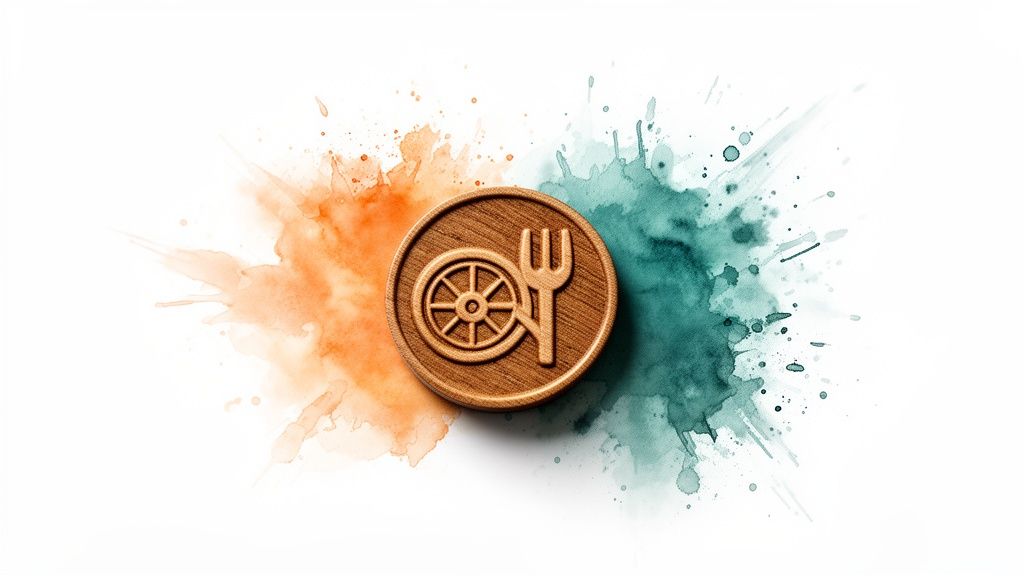
Consider Layers: Great symbols can have multiple interpretations. For a Valparaiso food truck, a logo could combine a fork with a road, symbolizing both food and travel. This adds richness and intrigue.
By weaving meaningful symbolism into your logo, you create an intelligent and enduring brand identity that tells your unique story without saying a word.
8. Ensure It Works in Black & White
One of the most critical tests for any logo is its ability to perform in a single color. A great logo must be just as powerful and recognizable in plain black and white as it is in full color. This monochrome functionality ensures your logo's core structure is strong and that its message isn't dependent on a specific color palette—a key principle of professional logo design best practices.
Think about resilient brands like Nike or Apple. Their strength lies in their shape and concept, not their color. For a local contractor in Portage or a salon in Chicagoland, this versatility is crucial. Your logo will appear on invoices, embroidered uniforms, and single-color vehicle decals. If it loses its meaning without color, it's not a functional design.
Why Monochrome Functionality Matters
A logo that works in black and white is fundamentally stronger. This test forces the design to rely on form and negative space rather than using color as a crutch. This ensures maximum usability across every conceivable application, from a laser-etched design on a metal sign to a simple faxed document. It guarantees your brand identity remains consistent and professional no matter the context.
Key Insight: A logo that fails the black-and-white test is built on a weak foundation. True strength comes from a design whose concept and form are so clear they transcend color entirely.
Action Steps for Monochrome Versatility:
Design in Black and White First: The professional standard is to create the logo's form in monochrome before introducing color. This ensures the foundational concept is sound from the start.
Check for Contrast: Ensure all elements of your logo have enough contrast to remain distinct when converted to a single color. Elements that rely on subtle color differences will merge and become illegible.
Test on Different Backgrounds: Place your black-and-white logo on light, dark, and textured backgrounds. A truly versatile logo includes a version that works on black (often called a "knockout" or reversed version).
Think About Embroidery and Engraving: For businesses like HVAC contractors or barbershops, consider how the logo will look embroidered on a polo or etched onto an award. These applications are inherently monochrome, making a strong silhouette non-negotiable.
9. Follow a Professional Design and Testing Process
A powerful logo isn't born from a single idea; it's forged through a strategic process. The best logo design best practices involve more than just aesthetics. They begin with research into your brand, your market in areas like Northwest Indiana, and your ideal customers, then move through concept development, real-world testing, and careful refinement.
This professional approach prevents costly missteps and ensures your final logo isn't just a pretty picture but a hard-working business asset. It’s the difference between a logo that simply looks nice and one that truly connects with your target audience, whether they're salon clients in Valparaiso or homeowners needing HVAC services in Portage. This structured method ensures your investment in professional graphic design services pays dividends for years.
Why a Professional Process Matters
Jumping straight to the final design without proper groundwork often leads to a logo that misses the mark. A structured process ensures the design is grounded in strategy, not just a designer's personal taste. By testing concepts with your actual target audience, you gather invaluable feedback that can highlight potential problems before you invest in vehicle wraps, signage, and marketing materials across Chicagoland.
Key Insight: The design process is as important as the final design. A great process builds a strategic foundation, while a poor one relies on guesswork.
Action Steps for a Strategic Design Process:
Demand a Strategy-First Approach: A professional designer should start by asking about your business goals, target audience, and competitors—not by showing you designs. They should understand your brand's position before starting.
Review Multiple Concepts: Never settle for the first idea. Request 3 to 5 distinct conceptual directions. This allows you to explore different strategic paths and creative solutions for your brand.
Involve Your Real Audience: Test the top concepts with a small group of your ideal customers. For a barbershop, show it to loyal clients. For a contractor, ask past customers for their gut reactions. Their feedback is more valuable than a friend's opinion.
Ask Open-Ended Questions: When testing, avoid leading questions like "Do you like this?" Instead, ask "What does this logo make you think of?" or "What kind of business does this logo represent?"
Refine Based on Feedback: Use feedback to iterate. The goal is refinement, not starting from scratch. Small, informed tweaks based on testing can transform a good logo into a great one.
10. Get the Right Logo Files and Technical Specs
A brilliant logo design is only as effective as the files you receive. One of the most critical logo design best practices is ensuring you get a complete and professional package of file formats. This technical step guarantees your new brand identity will look crisp and professional everywhere, from a large-format sign in Portage to an Instagram profile picture.
Without the right files, your logo can appear blurry, distorted, or use the wrong colors, undermining your brand's credibility. A professional designer like Creative Graphics Solutions will always provide a comprehensive set of file types to cover every possible application. This ensures your logo is a versatile and future-proof asset for your Northwest Indiana business.
Why File Formats Matter
Different applications require different file types. A vector file (like an .AI or .EPS) is infinitely scalable without losing quality, making it essential for large-scale printing. A raster file (like a .JPG or .PNG) is pixel-based and ideal for web use. Having both ensures you are prepared for any marketing opportunity, from a Chicagoland billboard to a business card.
Key Insight: Receiving a full suite of logo files isn't a bonus; it's a fundamental requirement. It gives you full control over your brand identity and prevents costly file conversion issues down the road.
Action Steps for Your Logo File Package:
Demand Vector Files: Always insist on receiving the original, editable vector files (.AI, .EPS, .SVG). These are the master files needed for any high-quality printing, from a food truck wrap to storefront signage.
Get Web-Ready Files: Ensure your package includes web-optimized raster files like .JPGs for general use and .PNGs with transparent backgrounds for layering over images or colored backgrounds on your website.
Request Color Variations: A complete package includes your logo in full color, black, and all-white (knockout) versions. This ensures your logo is legible on any background.
Ask for Brand Guidelines: The best logo packages come with a brand guide. This document specifies your official brand colors (Pantone, CMYK, RGB, HEX codes), fonts, and rules for proper logo usage. You can learn more about creating brand guidelines for your business to maintain consistency.
10-Point Logo Design Best Practices Comparison
Approach | 🔄 Implementation Complexity | ⚡ Resource Requirements & Time | ⭐ Expected Effectiveness | 📊 Expected Outcomes | Ideal Use Cases / Key Advantages 💡 |
|---|---|---|---|---|---|
Simplicity and Minimalism | Low–Medium — needs disciplined reduction | Low — fewer elements, faster production | ⭐⭐⭐⭐ | High recognizability; cost‑effective reproduction | Food trucks, retail — memorable, scalable, versatile |
Distinctive and Unique Visual Identity | High — original concept and craft required | Medium–High — creative investment, possible custom assets | ⭐⭐⭐⭐⭐ | Strong differentiation; supports premium positioning | Contractors, salons — builds reputation and recall |
Scalability and Versatility | Medium — multiple versions and testing | Medium — create variations/files, format prep | ⭐⭐⭐⭐ | Consistent presence across sizes and media | HVAC vans, food trucks, signage — ensures legibility |
Appropriate Color Psychology and Palette | Medium — research and cultural checks | Low–Medium — palette tests, color specs | ⭐⭐⭐⭐ | Emotional connection; improved recall and positioning | Food trucks, retail — drives attraction; aligns values |
Typography and Font Selection | Medium–High — careful selection or custom type | Medium–High — licensing or custom type design | ⭐⭐⭐⭐ | Conveys personality; improves legibility and credibility | Salons, luxury brands, barbershops — tone and distinctiveness |
Timelessness Over Trendy Design | Medium — restraint and conceptual strength | Medium — research; potentially higher upfront cost | ⭐⭐⭐⭐⭐ | Long-term equity; reduced rebranding need | Contractors, nonprofits — stable identity across decades |
Meaningful Symbolism and Conceptual Depth | High — strategic research and clever execution | Medium–High — concept testing and refinement | ⭐⭐⭐⭐ | Emotional resonance; strong storytelling and recall | Nonprofits, food trucks — communicates mission clearly |
Monochrome Versatility & B/W Functionality | Low–Medium — simplify color‑dependent details | Low — test and create monochrome versions | ⭐⭐⭐⭐ | Broad reproduction options; lower printing costs | Contractors, uniforms, engraving — essential for reproduction |
Professional Design Process, Testing, Iterative Refinement | High — multi‑phase research, testing, iteration | High — stakeholder time, research, testing budgets | ⭐⭐⭐⭐⭐ | Strategy‑aligned logos; reduced launch risk | All businesses — critical for nonprofits & competitive markets |
Logo Format Files & Technical Specifications | Medium — prepare multiple formats and docs | Medium — file prep, guidelines, asset organization | ⭐⭐⭐⭐ | Future‑proof assets; consistent reproduction | All businesses — vital for vehicle wraps, print, web |
Ready to Build a Brand That Gets Noticed?
Navigating the landscape of logo design best practices can feel overwhelming. We’ve covered a lot, from the power of simplicity to the technical realities of scalability and file formats. The goal isn't just to create something that looks good, but to build a timeless, meaningful symbol that functions flawlessly everywhere your brand lives.
Think of these principles as strategic tools. An effective logo doesn't just happen; it’s the result of a deliberate process. It’s about ensuring your design works just as powerfully in single-color embroidery as it does on a full-color billboard in downtown Chicago. It’s about creating a mark that instantly communicates your value, whether you're a contractor in Portage, a salon owner in Valparaiso, or a food truck serving the entire Northwest Indiana region.
From Principles to Profit: The Real Impact of Your Logo
Mastering these concepts is a direct investment in your business’s credibility and growth. A professional logo builds trust at a glance, differentiates you from the competition, and fosters brand loyalty. It’s the visual handshake that tells potential customers you are professional, reliable, and the right choice for them.
When your logo is memorable and versatile, it becomes a powerful asset that works for you 24/7. It simplifies your marketing, creates a consistent brand experience, and ultimately, helps attract and retain the customers who will grow your business. This single graphic is the cornerstone of your entire visual identity. A smart logo combined with other small business branding tips will ensure your brand is cohesive and impactful.
Your Actionable Next Steps
Feeling inspired? Good. Now it’s time to put these logo design best practices into action. Here’s how you can start today:
Audit Your Current Logo: Does your existing logo meet these criteria? Assess its simplicity, scalability, and relevance. Be honest about its strengths and weaknesses.
Define Your Brand Essence: Before you think about design, clarify your message. What are your core values? Who is your ideal customer? What feeling do you want to evoke?
Gather Inspiration (Strategically): Look at the logos of businesses you admire, both in your industry and outside of it. Don't look for ideas to copy; look for strategies to emulate.
Consult a Professional: A DIY logo often looks like a temporary solution. Partnering with a professional designer is the fastest way to get a strategic, effective, and technically sound logo that you can build your business on for years.
Your logo is the face of your business, the first impression you make, and a critical component of your long-term success. By following these logo design best practices, you’re not just creating a picture; you’re building a brand that gets noticed, remembered, and trusted.
Ready to upgrade your brand? The team at Creative Graphics Solutions specializes in applying these exact logo design best practices to help small businesses across Northwest Indiana and Chicagoland build powerful, professional brand identities. Let's create a logo that not only looks great but also works hard for your business. Give us a call at 219-764-1717 or request a free quote today! SEO Title: 10 Logo Design Best Practices for Small Business Success Meta Description: Learn 10 essential logo design best practices for your Northwest Indiana business. Create a logo that is simple, memorable, versatile, and timeless.
Comments